Middle East
From the Knowledge Hub, the cited wiki
The Middle East is a geo-political region that is generally defined as encompassing all of Egypt and all of West Asia except for the Caucasus. It roughly corresponds with what was historically referred to in Western Europe as the Near East, which was juxtaposed with the Far East.
The Middle East is a geo-political region that is generally defined as encompassing all of Egypt and all of West Asia except for the Caucasus. It roughly corresponds with what was historically referred to in Western Europe as the Near East, which was juxtaposed with the Far East. Unlike West Asia's adherence to continental boundaries, the Middle East is demarcated by following political borders and consequently includes East Thrace in Southeast Europe because it is a part of Turkey.[1]
Terminology
The term "Middle East" may have originated with the India Office of the United Kingdom in the 1850s. However, it became more widely known through the United States, particularly after American naval strategist Alfred Thayer Mahan used the term to "designate the area between Arabia and India" in 1902. During this period, the United Kingdom was vying for influence in Central Asia as part of the "Great Game" against the Russian Empire, which was in the process of conquering the entire region.[1]
Usage and criticism
The description Middle has also led to some confusion over changing definitions. Before the First World War, "Near East" was used in English to refer to the Balkans and the Ottoman Empire, while "Middle East" referred to the Caucasus, Persia, and Arabian lands, and sometimes Afghanistan, India and others. In contrast, "Far East" referred to the countries of East Asia (e.g.[1]
Translations
European languages have adopted terms similar to Near East and Middle East. Since these are based on a relative description, the meanings depend on the country and are generally different from the English terms. In German the term Naher Osten (Near East) is still in common use (nowadays the term Mittlerer Osten is more and more common in press texts translated from English sources, albeit having a distinct meaning).[1]
Countries and territory usually considered within the Middle East
Traditionally included within the Middle East are Arabia, Asia Minor, East Thrace, Egypt, Iran, the Levant, Mesopotamia, and the Socotra Archipelago. The region includes 17 UN-recognized countries and one British Overseas Territory.[1]
Other definitions of the Middle East
Various concepts are often paralleled to the Middle East, most notably the Near East, Fertile Crescent, and Levant. These are geographical concepts, which refer to large sections of the modern-day Middle East, with the Near East being the closest to the Middle East in its geographical meaning. Due to it primarily being Arabic speaking, the Maghreb region of North Africa is sometimes included.[1]
History
The Middle East lies at the juncture of Africa and Eurasia and of the Indian Ocean and the Mediterranean Sea (see also: Indo-Mediterranean). It is the birthplace and spiritual center of religions such as Christianity, Islam, Judaism, Manichaeism, Yezidi, Druze, Yarsan, and Mandeanism, and in Iran, Mithraism, Zoroastrianism, Manicheanism, and the Baháʼí Faith. Throughout its history the Middle East has been a major center of world affairs; a strategically, economically, politically, culturally, and religiously sensitive area.[1]
Economy
Middle Eastern economies range from being very poor (such as Gaza Strip and Yemen) to extremely wealthy nations (such as Qatar and the United Arab Emirates). According to the International Monetary Fund, the three largest Middle Eastern economies in nominal GDP in 2023 were Saudi Arabia ($1.06 trillion), Turkey ($1.03 trillion), and Israel ($0.54 trillion). For nominal GDP per person, the highest ranking countries are Qatar ($83,891), Israel ($55,535), the United Arab Emirates ($49,451) and Cyprus ($33,807).[1]
Ethnic groups
Arabs constitute the largest ethnic group in the Middle East, followed by various Iranian peoples and then by Turkic peoples (Turkish, Azeris, Syrian Turkmen, and Iraqi Turkmen). Native ethnic groups of the region include, in addition to Arabs, Arameans, Assyrians, Baloch, Berbers, Copts, Druze, Greek Cypriots, Jews, Kurds, Lurs, Mandaeans, Persians, Samaritans, Shabaks, Tats, and Zazas. European ethnic groups that form a diaspora in the region include Albanians, Bosniaks, Circassians (including Kabardians), Crimean Tatars, Greeks, Franco-Levantines, Italo-Levantines, and Iraqi Turkmens.[1]
Migration
"Migration has always provided an important vent for labor market pressures in the Middle East. For the period between the 1970s and 1990s, the Arab states of the Persian Gulf in particular provided a rich source of employment for workers from Egypt, Yemen and the countries of the Levant, while Europe had attracted young workers from North African countries due both to proximity and the legacy of colonial ties between France and the majority of North African states."[1]
Images


See also
References
- ↑ a b c d e f g h i j “Middle East”. Wikipedia. Text adapted from Wikipedia under CC BY-SA 4.0. Rewrite it in your own words where you can. Encyclopedia Retrieved 2026-11-13
Further reading
- “www.cfr.org / region/397/middle_east.html”. cfr.org. Link found on the Wikipedia page. Open it, check it and fix this title before relying on it. Organization Retrieved 2026-11-13
- “www.cfr.org / publication/13850”. cfr.org. Link found on the Wikipedia page. Open it, check it and fix this title before relying on it. Organization Retrieved 2026-11-13
- “www.arabianbusiness.com”. arabianbusiness.com. Link found on the Wikipedia page. Open it, check it and fix this title before relying on it. Web page Retrieved 2026-11-13
- “www.meed.com”. meed.com. Link found on the Wikipedia page. Open it, check it and fix this title before relying on it. Web page Retrieved 2026-11-13
- “www.carboun.com”. carboun.com. Link found on the Wikipedia page. Open it, check it and fix this title before relying on it. Web page Retrieved 2026-11-13
- “www.turkishweekly.net / comments.php”. turkishweekly.net. Link found on the Wikipedia page. Open it, check it and fix this title before relying on it. Web page Retrieved 2026-11-13
Related articles


Explore related pages
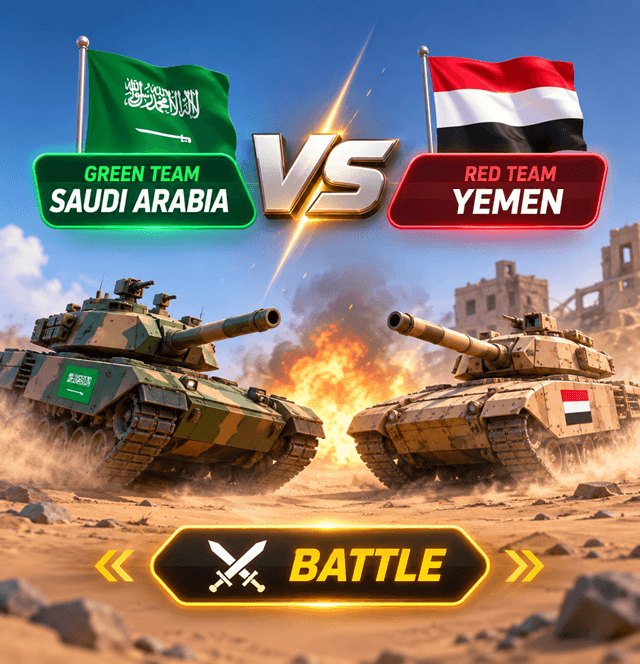
- TikTok Tank BattleOther · GREEN VS RED Viewers join a team through comments. Likes add points, and gifts launch attacks against the opposing team.
- TikTok DAVLOX BattleOther · VIEWER A vs VIEWER B Two viewers compete using selected characters. Their comments or supported gifts trigger moves and special attacks.

Make it happen
Follow Jii Saaduddin
Jii Saaduddin · Blogs & Guests, Wiki and more
Our Facebook page and TikTok cover the blog, the Wiki and everything else on the site. Follow to stay in the loop.