Privacy policy
From the Knowledge Hub, the cited wiki
A privacy policy is a statement or legal document (in privacy law) that discloses some or all of the ways a party gathers, uses, discloses, and manages a customer or client's data, while a privacy notice tells clients or data subjects what data is held by an organisation and how that data will be ha
A privacy policy is a statement or legal document (in privacy law) that discloses some or all of the ways a party gathers, uses, discloses, and manages a customer or client's data, while a privacy notice tells clients or data subjects what data is held by an organisation and how that data will be handled. Personal information can be anything that can be used to identify an individual, not limited to the person's name, address, date of birth, marital status, contact information, ID issue, and expiry date, financial records, credit information, medical history, where one travels, and intentions to acquire goods and services. In the case of a business, it is often a statement that declares a party's policy on how it collects, stores, and releases personal information it collects.[1]
History
In 1968, the Council of Europe began to study the effects of technology on human rights, recognizing the new threats posed by computer technology that could link and transmit in ways not widely available before. In 1969 the Organisation for Economic Co-operation and Development (OECD) began to examine the implications of personal information leaving the country. All this led the council to recommend that policy be developed to protect personal data held by both the private and public sectors, leading to Convention 108.[1]
Fair information practice
There are significant differences between the EU data protection and US data privacy laws. These standards must be met not only by businesses operating in the EU but also by any organization that transfers personal information collected concerning citizens of the EU. In 2001 the United States Department of Commerce worked to ensure legal compliance for US organizations under an opt-in Safe Harbor Program.[1]
Current enforcement
In 1995 the European Union (EU) introduced the Data Protection Directive for its member states. As a result, many organizations doing business within the EU began to draft policies to comply with this Directive. In the same year, the U.S.[1]
United States
While no generally applicable law exists, some federal laws govern privacy policies in specific circumstances, such as:[1]
Canada
Canada's federal Privacy Law applicable to the private sector is formally referred to as Personal Information Protection and Electronic Documents Act (PIPEDA). The purpose of the act is to establish rules to govern the collection, use, and disclosure of personal information by commercial organizations. The organization is allowed to collect, disclose and use the amount of information for the purposes that a reasonable person would consider appropriate in the circumstance.[1]
European Union
The right to privacy is a highly developed area of law in Europe. All the member states of the European Union (EU) are also signatories of the European Convention on Human Rights (ECHR). Article 8 of the ECHR provides a right to respect for one's "private and family life, his home and his correspondence", subject to certain restrictions.[1]
Australia
The Privacy Act 1988 provides the legal framework for privacy in Australia. It includes a number of national privacy principles. There are thirteen privacy principles under the Privacy Act.[1]
India
The Information Technology (Amendment) Act, 2008 made significant changes to the Information Technology Act, 2000, introducing Section 43A. This section provides compensation in the case where a corporate body is negligent in implementing and maintaining reasonable security practices and procedures and thereby causes wrongful loss or wrongful gain to any person. This applies when a corporate body possesses, deals or handles any sensitive personal data or information in a computer resource that it owns, controls or operates.[1]
Online privacy certification programs
Online certification or "seal" programs are an example of industry self-regulation of privacy policies. Seal programs usually require implementation of fair information practices as determined by the certification program and may require continued compliance monitoring. TRUSTArc (formerly TRUSTe), the first online privacy seal program, included more than 1,800 members by 2007.[1]
See also
References
- ↑ a b c d e f g h i j “Privacy policy”. Wikipedia. Text adapted from Wikipedia under CC BY-SA 4.0. Rewrite it in your own words where you can. Encyclopedia Retrieved 2026-11-13
Further reading
- “www.cdt.org / privacy/guide/protect”. cdt.org. Link found on the Wikipedia page. Open it, check it and fix this title before relying on it. Organization Retrieved 2026-11-13
- “forms.truste.com / go/truste/learn_more_3”. forms.truste.com. Link found on the Wikipedia page. Open it, check it and fix this title before relying on it. Web page Retrieved 2026-11-13
- “www.trust-guard.com / Privacy-Seals-s/77.htm”. trust-guard.com. Link found on the Wikipedia page. Open it, check it and fix this title before relying on it. Web page Retrieved 2026-11-13
- “www.etrust.org / certification/privacy”. etrust.org. Link found on the Wikipedia page. Open it, check it and fix this title before relying on it. Organization Retrieved 2026-11-13
- “www.chariotsfire.com / pub/cpig-jan2007.pdf”. chariotsfire.com. Link found on the Wikipedia page. Open it, check it and fix this title before relying on it. Web page Retrieved 2026-11-13
- “credibility.stanford.edu / resources.html”. credibility.stanford.edu. Link found on the Wikipedia page. Open it, check it and fix this title before relying on it. Academic Retrieved 2026-11-13
Related articles
Explore related pages
- TikTok Tank BattleOther · GREEN VS RED Viewers join a team through comments. Likes add points, and gifts launch attacks against the opposing team.
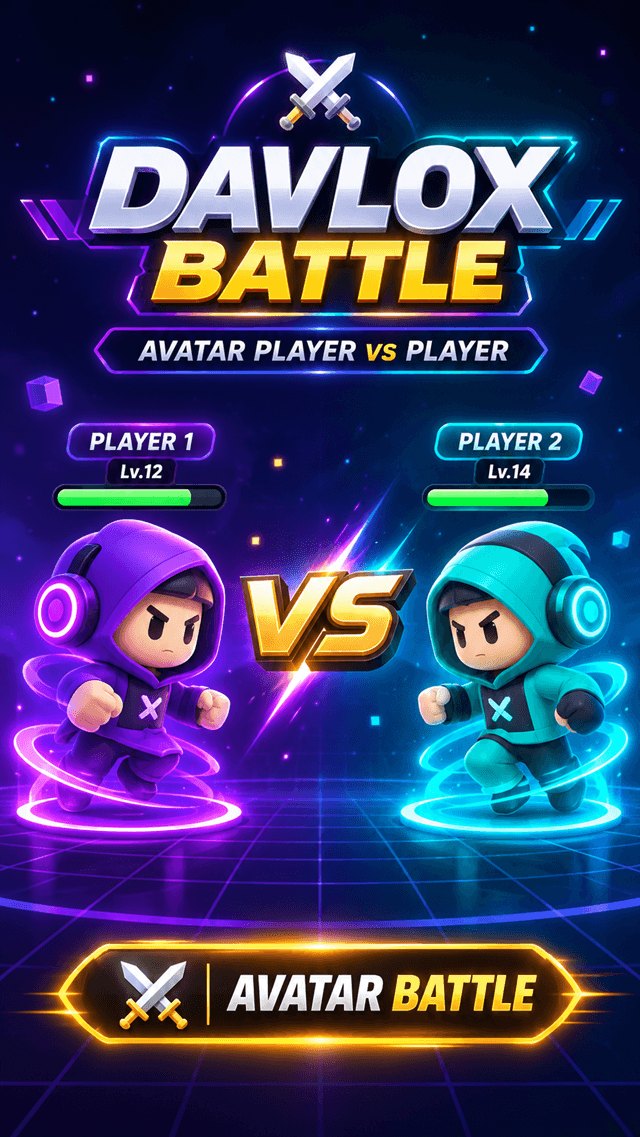
- TikTok DAVLOX BattleOther · VIEWER A vs VIEWER B Two viewers compete using selected characters. Their comments or supported gifts trigger moves and special attacks.

Make it happen
Follow Jii Saaduddin
Jii Saaduddin · Blogs & Guests, Wiki and more
Our Facebook page and TikTok cover the blog, the Wiki and everything else on the site. Follow to stay in the loop.