Flags of the Ottoman Empire
The Ottoman Empire used various flags and naval ensigns during its history. The crescent and star came into use in the second half of the 18th century.
Flags of the Ottoman Empire is covered here in 6 connected parts: Flags of the Ottoman Empire, Ottoman business in the Philippines, History of Ottoman business, Culture and traditions of Ottoman business, Ottoman business: key facts and timeline, Dissolution of the Ottoman Empire.
Flags of the Ottoman Empire
The Ottoman Empire used various flags and naval ensigns during its history. The crescent and star came into use in the second half of the 18th century. A buyruldu (decree) from 1793 required that the ships of the Ottoman Navy were to use a red flag with the star and crescent in white.[1]
Crescent flag
The simple crescent flag started to appear in the Ottoman Empire from its foundation in 1453, and was reported as late as 1780 in the Battle of Kagul.[1]
Naval standards
Numerous authors, especially in the 18th and 19th centuries reported on the variety of naval flags in the Ottoman Empire, starting with Bowles's "Universal display of the naval flags of all nations in the world" (1783). The designs of the flags depended on the rank or geographical base of their owners.[1]
Crescent and star flag
The star and crescent design is reported as early as 1526 at the Battle of Mohács, or the Siege of Wien in 1683, and continues to appear more systematically after 1793, on Ottoman flags of the 19th century. The white star and crescent moon with a red background was introduced as the flag of the Ottoman Empire in 1844.[1]
Source of the Star and Crescent symbol
It has been suggested that the star-and-crescent used in Ottoman flags of the 19th century had been adopted from the Byzantine. Franz Babinger (1992) suggests this possibility, noting that the crescent alone has a much older tradition also with Turkic tribes in the interior of Asia. The crescent and star is found on the coinage of Byzantium since the 4th century BC and was depicted on Byzantine Empire's coins and shields of Christian warrior saints till the 13th century.[1]
Imperial standards
The imperial standard displayed the sultan's tughra, often on a pink or bright red background.[1]
Army Flags and Standards with Shahada
The Ottoman army often used verses from the Quran and Shahada on their flags. This tradition continued during the First World War. When Ottoman Turkey joined the war on the side of the Central Powers in 1914, it declared a jihad against the Entente States.[1]
Related: Ottoman business in the Philippines · History of Ottoman business · Culture and traditions of Ottoman business
External references: [1][2][3]
Ottoman business in the Philippines
Write this section, then cite a source for it.
Related: Flags of the Ottoman Empire · History of Ottoman business · Culture and traditions of Ottoman business
History of Ottoman business
Early flags
Pre-modern Ottoman armies used the horse-tail standard or tugh rather than flags. Such standards remained in use alongside flags until the 19th century. A depiction of a tugh appears in the Relation d'un voyage du Levant by Joseph Pitton de Tournefort (1718).[1]
Related: Flags of the Ottoman Empire · Ottoman business in the Philippines · Culture and traditions of Ottoman business
External references: [1][4][5]
Culture and traditions of Ottoman business
Write this section, then cite a source for it.
Related: Flags of the Ottoman Empire · Ottoman business in the Philippines · History of Ottoman business
Ottoman business: key facts and timeline
Write this section, then cite a source for it.
Related: Flags of the Ottoman Empire · Ottoman business in the Philippines · History of Ottoman business
Dissolution of the Ottoman Empire

The dissolution of the Ottoman Empire (1908–1922) was a period of history of the Ottoman Empire beginning with the Young Turk Revolution and ultimately ending with the empire's dissolution and the founding of the modern state of Turkey. The Young Turk Revolution restored the constitution of 1876 and brought in multi-party politics with a two-stage electoral system for the Ottoman Parliament. At the same time, a nascent movement called Ottomanism was promoted in an attempt to maintain the unity of the Empire, emphasising a collective Ottoman nationalism regardless of religion or ethnicity.[6]
Social conflicts
Europe became dominated by nation states with the rise of nationalism in Europe. The 19th century saw the rise of nationalism under the Ottoman Empire which resulted in the establishment of an independent Greece in 1821, Serbia in 1835, and Bulgaria in 1877–1878. Unlike the European nations, the Ottoman Empire made little attempt to integrate conquered peoples through cultural assimilation.[6]
Economic issues
The Capitulations were the main discussion of economic policy during the period. It used to be believed incoming foreign assistance with capitulation could benefit the Empire. Ottoman officials, representing different jurisdictions, sought bribes at every opportunity and withheld the proceeds of a vicious and discriminatory tax system.[6]
Young Turk Revolution
In July 1908, the Young Turk Revolution changed the political structure of the Empire. The Committee of Union and Progress (CUP) rebelled against the absolute rule of Sultan Abdul Hamid II to establish the Second Constitutional Era. On 24 July 1908, Abdul Hamid II capitulated and restored the Ottoman constitution of 1876.[6]
Further disintegration
The de jure Bulgarian Declaration of Independence on 5 October [O.S. 22 September] 1908 from the Empire was proclaimed in the old capital of Tarnovo by Prince Ferdinand of Bulgaria, who afterwards took the title "Tsar".[6]
New Parliament
The 1908 Ottoman general election was preceded by political campaigns. In the summer of 1908, a variety of political proposals were put forward by the CUP. The CUP stated in its election manifesto that it sought to modernize the state by reforming finance and education, promoting public works and agriculture, and the principles of equality and justice.[6]
31 March Incident
After nine months into the new government, discontent found expression in a fundamentalist movement which attempted to dismantle Constitution and revert it with a monarchy. The 31 March Incident began when Abdul Hamid promised to restore the Caliphate, eliminate secular policies, and restore the rule of Islamic law, as the mutinous troops claimed. CUP also eliminated the time for religious observance.[6]
Italian War, 1911
Italy declared war, the Italo-Turkish War, on the Empire on 29 September 1911, demanding the turnover of Tripoli and Cyrenaica. Italian forces took those areas on 5 November of that year. Although minor, the war was an important precursor of World War I as it sparked nationalism in the Balkan states.[6]
1912 election and coup
The Freedom and Accord Party, successor to the Liberty Party, was in power when the First Balkan War broke out in October. The Party of Union and Progress won landslide the 1912 Ottoman general election. Decentralization (the Liberal Union's position) was rejected and all effort was directed toward streamline of the government, streamlining the administration (bureaucracy), and strengthening the armed forces.[6]
Balkan Wars, 1912–1913
The three new Balkan states formed at the end of the 19th century and Montenegro, sought additional territories from the Albania, Macedonia, and Thrace regions, behind their nationalistic arguments. The incomplete emergence of these nation-states on the fringes of the Empire during the nineteenth century set the stage for the Balkan Wars. On 10 October 1912 the collective note of the powers was handed.[6]
Related: Flags of the Ottoman Empire · Ottoman business in the Philippines · History of Ottoman business
Images


See also
References
- ↑ a b c d e f g h i j “Flags of the Ottoman Empire”. Wikipedia. Text adapted from Wikipedia under CC BY-SA 4.0. Rewrite it in your own words where you can. Encyclopedia Retrieved 2026-11-04
- ↑ ^ “www.crwflags.com / fotw/flags/tr_ott16.html”. crwflags.com. Link found on the Wikipedia page. Open it, check it and fix this title before relying on it. Web page Retrieved 2026-11-04
- ↑ ^ “www.crwflags.com / fotw/flags/tr_ott18.html”. crwflags.com. Link found on the Wikipedia page. Open it, check it and fix this title before relying on it. Web page Retrieved 2026-11-04
- ↑ ^ “gallica.bnf.fr / ark:/12148/bpt6k853370/f29.image.r=.langFR”. gallica.bnf.fr. Link found on the Wikipedia page. Open it, check it and fix this title before relying on it. Web page Retrieved 2026-11-04
- ↑ ^ “seyler.eksisozluk.com / sosyal-medyada-seriat-bayragi-diye-paylasilan-bayragin-aslinda-rumeliden-gelmesi”. seyler.eksisozluk.com. Link found on the Wikipedia page. Open it, check it and fix this title before relying on it. Web page Retrieved 2026-11-04
- ↑ a b c d e f g h i j k “Dissolution of the Ottoman Empire”. Wikipedia. Text adapted from Wikipedia under CC BY-SA 4.0. Rewrite it in your own words where you can. Encyclopedia Retrieved 2026-11-04
- ↑ ^ “countrystudies.us / albania/20.htm”. countrystudies.us. Link found on the Wikipedia page. Open it, check it and fix this title before relying on it. Web page Retrieved 2026-11-04
- ↑ ^ “www.foreignaffairs.com / 20080301faessay87203/jerry-z-muller/us-and-them.html”. foreignaffairs.com. Link found on the Wikipedia page. Open it, check it and fix this title before relying on it. Web page Retrieved 2026-11-04
Further reading
- “www.fotw.info / flags/tr-sult.html”. fotw.info. Link found on the Wikipedia page. Open it, check it and fix this title before relying on it. Web page Retrieved 2026-11-04
- “denizmuzesi.dzkk.tsk.tr / en/content/559”. denizmuzesi.dzkk.tsk.tr. Link found on the Wikipedia page. Open it, check it and fix this title before relying on it. Web page Retrieved 2026-11-04
- “www.independent.com.mt / articles/2012-04-19/news/turkeys-eu-minister-judge-giovanni-bonello-and-the-armenian-genocide-claim-about-malta-trials-is-nonsense-308828”. independent.com.mt. Link found on the Wikipedia page. Open it, check it and fix this title before relying on it. Web page Retrieved 2026-11-04
- “api.semanticscholar.org / CorpusID:144607707”. api.semanticscholar.org. Link found on the Wikipedia page. Open it, check it and fix this title before relying on it. Organization Retrieved 2026-11-04
- “api.semanticscholar.org / CorpusID:153500703”. api.semanticscholar.org. Link found on the Wikipedia page. Open it, check it and fix this title before relying on it. Organization Retrieved 2026-11-04
- “api.semanticscholar.org / CorpusID:145773201”. api.semanticscholar.org. Link found on the Wikipedia page. Open it, check it and fix this title before relying on it. Organization Retrieved 2026-11-04
Related articles


Explore related pages
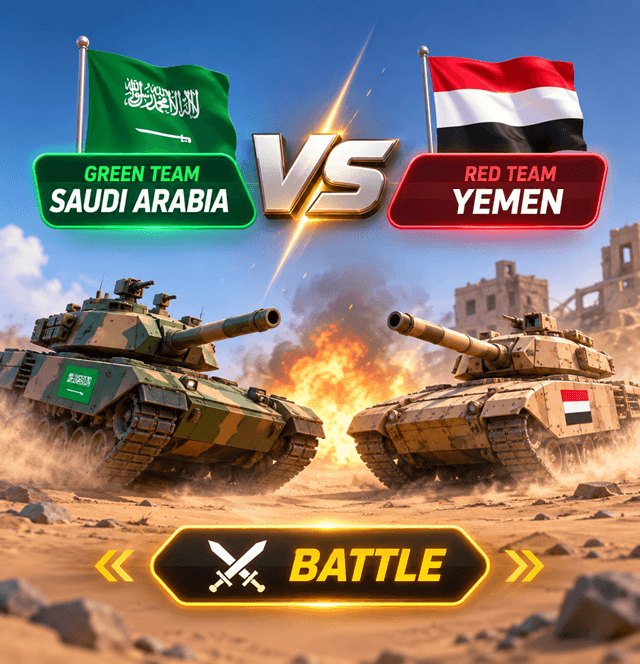
- TikTok Tank BattleOther · GREEN VS RED Viewers join a team through comments. Likes add points, and gifts launch attacks against the opposing team.
- TikTok DAVLOX BattleOther · VIEWER A vs VIEWER B Two viewers compete using selected characters. Their comments or supported gifts trigger moves and special attacks.

Make it happen
Follow Jii Saaduddin
Jii Saaduddin · Blogs, Wiki and more
Our Facebook page and TikTok cover the blog, the Wiki and everything else on the site. Follow to stay in the loop.