
 Muslimseo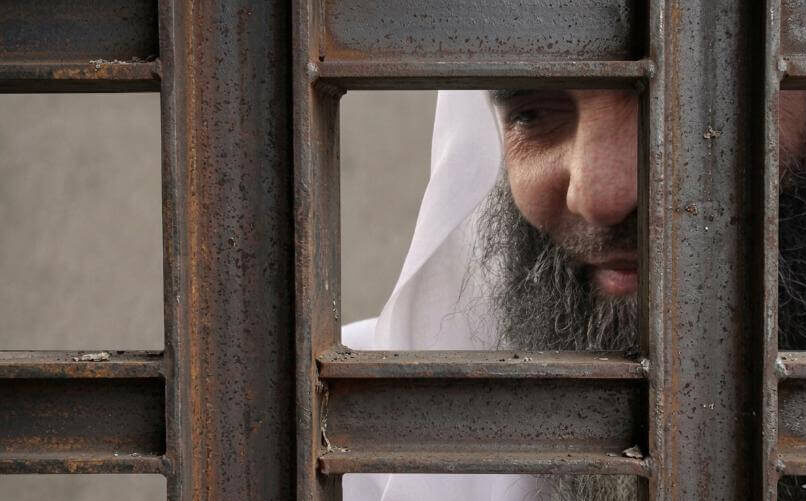
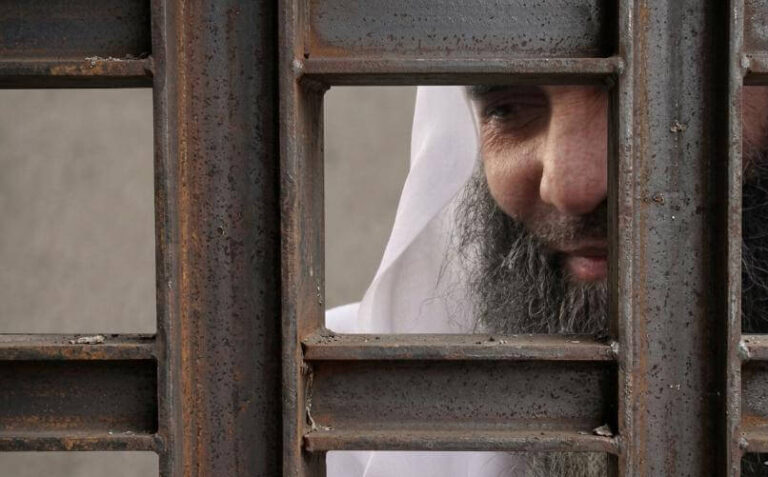
For decades, the crackdown on Salafism in Saudi Arabia was synonymous with a highly strict, state-sponsored version of Salafism. However, the landscape has shifted dramatically. Today, some of the most influential Salafi voices are not behind pulpits, but behind bars. To understand why this is happening, we have to look past theology and into the heart of power, politics, and the Kingdom’s Vision 2030 transformation.
Religious State “Aqeedah” to Nationalist State
Under the leadership of Crown Prince Mohammed bin Salman (MBS), Saudi Arabia is undergoing a historic pivot. The goal is to transition the country from a conservative religious hub to a global investment and entertainment destination.
In this new era, independent religious authority is seen as a liability. The state is no longer protecting a specific “Sectarian” identity as much as it is protecting a nationalist one. This shift creates a complex environment for various Islamic schools of thought. To better understand the theological landscape being reshaped, see our Comparison of Shia, Sufi, Wahhabi, Sunni, Salafi, and Ash’ari frameworks. Anyone who challenges the state’s monopoly on social and political direction—even if they are from the majority Salafi sect—is viewed as a threat.
The Crackdown on Salafism in Saudi Arabia
While exact government registries are private, human rights organizations like ALQST and Human Rights Watch (2026 Reports) have tracked a consistent surge in detentions since 2017.
- 80+ High-Profile Scholars: Since the initial “Sahwa” (Awakening) crackdown in late 2017, over 80 major clerics have been detained.
- The Death Penalty: Prosecutors have sought the death penalty for at least 3 world-renowned scholars: Salman al-Oudah, Awadh al-Qarni, and Ali al-Omari.
- Record Executions: In 2025 alone, Saudi Arabia carried out over 320 executions, many linked to “terrorism” charges that human rights groups argue are used to silence political dissent.
Why Salafis Are They Being Jailed?
It is a common misconception that these scholars are jailed for being “too Salafi.” In reality, they are often jailed for being too independent from the state’s narrative.
- Political Competition: The Sahwa movement combined Salafi theology with a desire for political participation. In an absolute monarchy, this is seen as an existential threat.
- Geopolitical Alignment: In some cases, scholars are targeted for failing to support specific foreign policy stances, particularly regarding regional rivals. For context on these long-standing tensions, explore our guide on Why Some Salafis Dislike Shia Muslims from Iran.
- The “Silence” Crime: Some scholars were reportedly arrested not for what they said, but for what they didn’t say. During the 2017 blockade of Qatar, those who did not publicly tweet support for the government’s position were targeted.
- Resistance to Social Reform: As the Kingdom opens cinemas and hosts massive music festivals, traditional scholars who criticize these moves on religious grounds are quickly silenced to prevent a conservative backlash.
The Human and Economic Cost
Reports from the U.S. Commission on International Religious Freedom (USCIRF) 2026 highlight a grim reality for those in detention. Many, like Dr. Al-Oudah (now in his late 60s), have spent years in solitary confinement. Legal proceedings are frequently held in the “Specialized Criminal Court,” which is designed for terrorism cases.
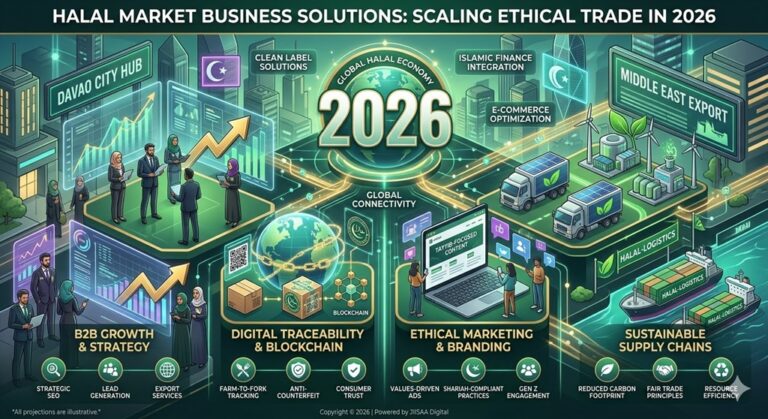
Despite these internal tensions, the Kingdom continues to aggressively pursue economic diversification. This includes positioning itself as a leader in the global ethical market. For more on how these standards are evolving, check out Halal Market Business Solutions – Scaling Ethical Trade in 2026. Furthermore, as the Saudi market opens up to the world, the need for sophisticated digital strategies has never been higher. For those looking to navigate this unique landscape, we offer a Simple Business Guide to Invest SEO tailored for the region.
Thumbs Up
The imprisonment of Salafi scholars in Saudi Arabia marks the end of an era where the “Ulama” (scholars) shared power with the “Umara” (princes). As the Kingdom races toward a secularized economic future, the “Jail Tuean” (the jail of those who resist or differ) has become a symbol of the high price of independent thought in a changing Middle East.
The 2026 AI Innovation is The New National Priority
While traditional religious structures are being reorganized, the Kingdom is rapidly building a new “Digital Mosque”—a massive infrastructure for Artificial Intelligence. The Saudi Cabinet has officially designated 2026 as the Year of Artificial Intelligence, signaling a shift toward becoming a top-tier global tech hub.
- The “AI Year” Strategy: Spearheaded by the SDAIA (Saudi Data and AI Authority), this project aims to train over 11,000 specialists and reach over a million participants through the “SAMAI” literacy program.
- Infrastructure Powerhouse: Saudi Arabia recently launched the Shaheen III supercomputer and the Hexagon data center, one of the world’s largest government-owned AI facilities.
- Global Partnerships: A landmark $10 billion partnership with Google Cloud and investments in “AI Factories” (powered by hundreds of thousands of NVIDIA GPUs) are designed to make Riyadh a regional center for data-driven decision-making.
Data Source Reported (2025-2026)
1. Human Rights Watch (HRW) – World Report 2026
- As of early December 2025, Saudi authorities carried out an unprecedented surge of at least 322 executions.
- HRW highlights that while at least 44 prisoners of conscience (including Mohammed al-Qahtani and Salma al-Shehab) were released between late 2024 and early 2025, they remain under strict travel bans and surveillance.
- Use this to show the “revolving door” policy—where some are released to ease international pressure, but the overall crackdown remains intense.
- Source: hrw.org/world-report/2026
2. ALQST for Human Rights – “Still Not Free” Annual Report (2026)
- ALQST confirmed that 2024 and 2025 were the bloodiest years in the last five decades for the Kingdom, with a total of 356 executions officially announced in 2025.
- The report documents the continued “enforced disappearance” of activists like Manahel al-Otaibi and the use of the Specialized Criminal Court (SCC) to hand down decades-long sentences for social media posts.
- This is the best source for “cases”—it provides the names of scholars and activists currently in the system.
- Source: alqst.org/en/reports
3. Reprieve & ESOHR (European Saudi Organisation for Human Rights)
- These groups track the five-fold increase in execution rates since 2015. They report that 2025 saw the “new normal” of almost daily executions, with 240 out of 356 related to drug offenses, often involving foreign nationals.
- They highlight the case of journalist Turki al-Jasser, who was executed in late 2024/early 2025 for his peaceful expression, and the ongoing risk to child defendants like Youssef al-Manasif.
- Use these for “numbers and rates”—they provide the best comparative data between the pre-MBS era and the current Vision 2030 era.
- Source: reprieve.org
4. USCIRF (U.S. Commission on International Religious Freedom) 2026
- Saudi Arabia remains a “Country of Particular Concern” (CPC). The report notes that religious dissenters face “arbitrary and egregiously long prison sentences.”
- USCIRF specifically tracks the mistreatment of Shia advocates and Sunni scholars who deviate from state-mandated narratives.
- Use this for “official validation”—since this is a U.S. government commission, it carries significant weight for international business and political audiences.
- Source: uscirf.gov/countries/saudi-arabia
About the Author


 Jii
Jii