
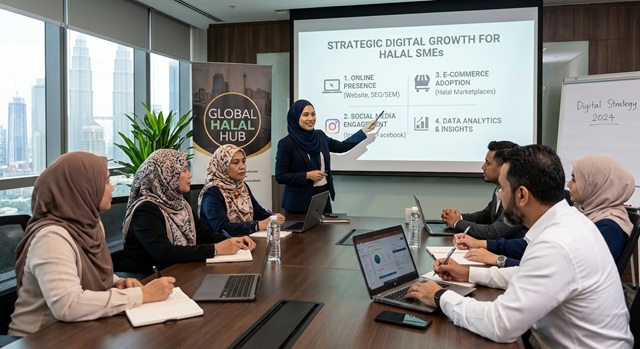
Strategic Digital Growth for Halal SMEs: A Practical Guide to Building Visibility, Trust, and Sales
For digital growth for halal SMEs or small and medium-sized enterprises), digital marketing growth is no longer simply about having a Facebook page or posting products online. A strong digital strategy can determine whether a Halal brand remains invisible in a crowded market or becomes a trusted business that customers actively search for, recommend, and return to.
The opportunity is significant. Halal businesses operate across food, restaurants, fashion, cosmetics, tourism, finance, education, healthcare, e-commerce, and professional services. Yet many SMEs still depend heavily on word-of-mouth marketing, personal networks, or social media posts that disappear within hours.
A strategic digital growth approach changes this.
Instead of chasing views, Halal SMEs can build search visibility, brand authority, customer trust, digital assets, and long-term organic traffic.
This guide explains seven practical areas that skyrocket your business should focus on when building a Muslim digital growth strategy.
Why Strategic Digital Growth Matters for Halal SMEs
A Halal business competes on more than price and product quality.
Customers may also consider:
- Is the business genuinely Halal?
- Can I find reliable information about the brand?
- Does the business have a professional online presence?
- Where is the business located?
- Can I see its products or services before visiting?
- Do other customers trust this business?
- Can I easily contact or order from them?
- Does the brand understand Muslim consumer needs?
These questions increasingly happen before the customer ever walks through the door.
A restaurant in Davao, a modest-fashion store in Marawi, a Halal food manufacturer in General Santos, or an Islamic education provider in Manila can all benefit from the same principle:
Be discoverable where your customers are already searching.
Digital growth therefore should not be treated as a collection of disconnected marketing activities. SEO, social media, websites, content, directories, reviews, video, and customer communication should work together as one ecosystem.
7 Strategic Areas for Digital Growth
1. Build a Strong Digital Foundation
Before spending heavily on advertising or social media campaigns, establish the basic digital infrastructure of the business.
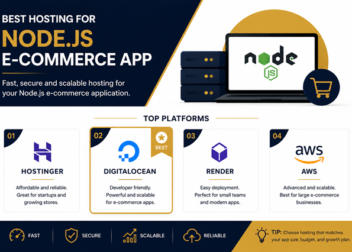
A reliable website infrastructure is particularly important for SMEs building e-commerce platforms or web applications. For businesses that require specialized infrastructure, resources such as Best Hosting for Node.js E-commerce App and Cheapest VPS for Running Python Web Scrapers 2026 can provide additional technical context when evaluating hosting requirements.
At minimum, a serious Halal SME should have:
- A professional website or landing page
- A branded domain
- Consistent business information
- Google Business Profile where applicable
- Active social media accounts
- Business contact information
- Product or service information
- Clear location details
- Customer inquiry or ordering channels
- A system for collecting reviews and testimonials
Your website should become the owned digital asset of the business.
Social media platforms are useful for distribution, but the business does not control the platform. Algorithms can change, reach can decline, and accounts can become inaccessible.
A website gives the brand a permanent home that can accumulate search visibility and authority over time.
For a Halal SME preparing to establish a physical business, digital growth should also be supported by proper local business compliance. In Davao City, entrepreneurs need to understand the relationship between business registration, the Mayor’s Permit, and other regulatory requirements. For a practical walkthrough, see How to Get a Mayor’s Permit in Davao. The guide explains the BPLO process, documentary requirements, application pathways, and common processing issues.
2. Make Halal Positioning Clear
Halal SMEs have a major opportunity to differentiate themselves through clarity and transparency.
However, simply placing the word “Halal” in a logo or social media caption is not necessarily enough to establish trust.
Your digital presence should clearly explain what makes the business Halal and, where applicable, provide relevant certification or verification information.
For example, a Halal restaurant could explain:
- Its Halal certification or status
- Sourcing practices
- Food preparation standards
- Restaurant location
- Menu
- Operating hours
- Customer reviews
- Frequently asked questions
A Halal cosmetics company can explain its ingredients, manufacturing process, certifications, and product standards.
The objective is not to make exaggerated claims.
The objective is to reduce uncertainty.
When customers can easily understand what a business offers and why they can trust it, the path from discovery to purchase becomes shorter.
3. Build Search Visibility Through SEO
For Halal businesses, SEO should be treated as a long-term digital foundation rather than simply a method for gaining traffic. A broader discussion of this approach can be found in Best SEO for Halal Businesses, which explores how search visibility can support the wider Halal economy.
A localized SEO strategy can be especially valuable for Halal SMEs operating within specific cities and communities. Businesses targeting Marawi City and Lanao del Sur can benefit from understanding how location-based search demand connects customers with local products and services. For a practical example, see SEO in Marawi City and Grow Your Business in Lanao del Sur
A Halal SME should identify the searches potential customers are already making.
Instead of targeting only broad keywords such as:
“Halal food”
build a more specific search strategy around buyer intent.
Examples include:
- Halal restaurant in Davao City
- Halal food in Marawi City
- Halal catering services in Davao
- Muslim-friendly restaurants in Mindanao
- Halal cosmetics Philippines
- Halal fashion Philippines
- Halal travel Mindanao
- Halal business directory Philippines
Long-tail searches are particularly valuable for SMEs because they can attract people with a clearer intention.
The goal is not simply to rank for thousands of keywords.
The goal is to appear when the right customer is looking for what you sell.
4. Turn Content Into a Business Asset
Many businesses publish content only when they have something to promote.
A stronger approach is to create content around the questions customers repeatedly ask.
For example, a Halal restaurant could publish:
“Where to Find Halal Food in Davao City”
A Halal travel company could publish:
“A Guide to Muslim-Friendly Travel in Mindanao”
A modest-fashion business could publish:
“How to Choose Comfortable Modest Clothing for Tropical Weather”
A Halal food manufacturer could publish:
“Understanding Halal Food Production in the Philippines”
Each useful article becomes another entry point into the business.
Over time, a website can develop a library of content covering:
- Products
- Services
- Locations
- Industry questions
- Halal education
- Customer guides
- Comparisons
- Case studies
- Frequently asked questions
- Local community topics
This creates an information ecosystem around the brand rather than a website that exists only to sell.
5. Connect SEO With Social Media
SEO and social media should not operate independently.
Location-based content can be particularly effective for businesses targeting specific communities. For example, a local food discovery article such as 8 Restaurants in Marawi City can attract users searching for restaurants while simultaneously strengthening local search visibility and content authority.
A single piece of content can become multiple digital assets.
For example:
One article → one Facebook post → one short video → several graphics → multiple social posts → internal website links → future search traffic.
This creates a content distribution system.
Social media can generate the initial attention while SEO helps the content remain discoverable after the social post disappears from the feed.
For Halal SMEs with limited marketing budgets, this approach can be particularly efficient.
Instead of producing completely different content for every platform, create one strong source of information and distribute it strategically.
6. Build Authority Beyond Your Own Website
A business becomes more credible when other relevant websites, organizations, publications, directories, and communities recognize it.
This is where digital authority becomes important.
Halal SMEs can build authority through:
- Business directories
- Local business publications
- Industry organizations
- Community websites
- Guest articles
- Interviews
- Partnerships
- Local news coverage
- Supplier relationships
- Customer testimonials
- Relevant backlinks
- Community events
For example, a Halal restaurant featured in a respected local business article can gain more than a backlink.
It can gain visibility, credibility, referral traffic, and brand recognition.
The important principle is relevance.
A hundred unrelated links are not necessarily more valuable than a few strong references from websites connected to the business’s industry, location, and audience.
7. Measure Business Growth, Not Just Views
One of the biggest digital marketing mistakes is treating views as the final objective.
A post receiving 100,000 views may produce fewer customers than a search result receiving 1,000 highly relevant visitors.
Halal SMEs should monitor metrics such as:
| Metric | What It Helps Measure |
|---|---|
| Organic traffic | Search visibility |
| Search impressions | Brand discovery |
| Keyword rankings | SEO performance |
| Website inquiries | Customer intent |
| Phone calls | Local conversion |
| WhatsApp inquiries | Direct demand |
| Product orders | Revenue impact |
| Conversion rate | Website effectiveness |
| Returning visitors | Brand interest |
| Reviews | Customer trust |
| Backlinks | Digital authority |
The most important question is:
Is digital activity producing measurable business value?
If the answer is no, the strategy needs to be adjusted.
A Practical Digital Growth Framework for Halal SMEs
A simple framework can help businesses organize their efforts:
Discover
Find the keywords, questions, locations, products, and problems your customers are searching for.
Build
Create the website, landing pages, business listings, social profiles, and content infrastructure required to capture that demand.
Optimize
Improve technical SEO, page structure, keywords, images, local information, internal linking, and conversion paths.
Distribute
Use Facebook, Instagram, TikTok, YouTube, communities, email, directories, and partnerships to distribute your content.
Establish Authority
Earn relevant mentions, backlinks, reviews, interviews, partnerships, and community recognition.
Convert
Turn visitors into inquiries, customers, subscribers, members, or repeat buyers.
Measure
Track traffic, rankings, inquiries, conversions, revenue, and customer behavior.
This creates a continuous cycle rather than a one-time marketing campaign.
Red Flags That Can Limit Digital Growth
Halal SMEs should be cautious of digital strategies that promise instant results without explaining the underlying system.
Buying Fake Followers
A large follower count does not automatically mean a strong business.
Fake or irrelevant followers can make social media statistics look impressive while producing little customer activity.
Chasing Viral Content
Viral content can be useful, but virality is unpredictable.
A business needs an audience and digital infrastructure that continue working after the viral post disappears.
Depending Entirely on One Platform
Building an entire business around Facebook, TikTok, Instagram, or another platform creates unnecessary risk.
Your website, customer database, content library, and search visibility should remain under your control.
Publishing Without a Strategy
Posting every day does not guarantee growth.
Every major piece of content should have a purpose:
Discover → Inform → Build Trust → Convert.
Ignoring Local Search
A customer searching for “Halal restaurant near me” has a different intent from someone searching for “What is Halal food?”
Local businesses should optimize for location-based searches, maps, reviews, and accurate business information.
How Much Should a Halal SME Invest in Digital Growth?
There is no universal budget.
A startup may begin with a basic website, business profile, content strategy, and organic SEO.
A growing SME may invest in:
- Professional website development
- Technical SEO
- Content production
- Photography and video
- Social media management
- Local SEO
- Digital PR
- Link building
- Marketing automation
- Paid advertising
The important question is not simply:
“How much should we spend?”
Instead ask:
“What digital asset are we building with this investment?”
An advertising campaign stops when the budget stops.
A strong article can continue attracting search traffic months or years after publication.
A well-optimized business profile can continue generating calls.
A trusted directory listing can continue sending referral traffic.
A high-quality website can continue converting visitors every day.
That is the difference between digital spending and digital asset building.
A 90-Day Digital Growth Roadmap
Days 1–30: Foundation
Focus on establishing the basic infrastructure.
- Audit the current website
- Create or improve the Google Business Profile
- Standardize business information
- Identify target customers
- Research primary keywords
- Define Halal positioning
- Improve website structure
- Set up analytics and search monitoring
Days 31–60: Visibility
Begin publishing and distributing useful content.
- Create location-based pages
- Publish educational articles
- Optimize product and service pages
- Create social media content from website articles
- Build relevant directory listings
- Collect legitimate customer reviews
- Start outreach for relevant partnerships and mentions
Days 61–90: Authority and Conversion
Focus on turning visibility into measurable business results.
- Analyze search performance
- Improve pages receiving traffic
- Strengthen internal linking
- Build relevant backlinks
- Improve calls-to-action
- Test inquiry and ordering processes
- Create more content based on customer searches
- Measure leads and conversions
After 90 days, the process should not stop.
The data from the first three months should determine what the business does next.
Frequently Asked Questions
What is strategic digital growth?
Strategic digital growth is the process of using websites, SEO, content, social media, directories, digital partnerships, and analytics together to increase a business’s visibility, authority, customer acquisition, and long-term online value.
Why is SEO important for Halal SMEs?
SEO helps potential customers discover a business when they are actively searching for relevant products, services, locations, or information. Unlike a temporary social media post, well-optimized content can continue generating organic visibility over time.
Does a Halal SME need a website if it already has Facebook?
Yes. Social media is valuable for distribution and customer engagement, but a website gives the business an owned digital asset where it can control its information, content, search optimization, and customer journey.
How can a small Halal business compete with larger companies?
Small businesses can compete through specialization. Instead of trying to dominate broad markets, an SME can become highly visible for specific Halal products, locations, communities, customer needs, and long-tail searches.
Should Halal SMEs focus on SEO or social media?
Ideally, both should work together. Social media can create awareness and engagement, while SEO can capture people actively searching for the business’s products and services. The strongest strategy connects the two.
How long does SEO take to produce results?
SEO is generally a long-term strategy. Results vary depending on competition, website quality, authority, content, technical issues, location, and search demand. Businesses should evaluate progress through improving visibility, rankings, traffic, inquiries, and conversions rather than expecting an overnight result.
Is digital growth only for online businesses?
No. Local restaurants, retailers, manufacturers, professional services, tourism businesses, schools, and community-based businesses can all benefit from digital visibility.
A customer may discover a business online and complete the transaction offline.
The Future of Halal SME Growth Is Digital
Halal SMEs do not necessarily need enormous marketing budgets to become digitally competitive.
They need a system.
A strong digital growth strategy connects search, content, social media, local visibility, authority, trust, and conversion into one ecosystem.
The objective is not to simply generate more likes.
It is to build a digital presence that makes the business easier to discover, easier to trust, and easier to choose.
For Halal SMEs, that opportunity extends beyond individual businesses. As the Halal economy continues developing, a stronger digital ecosystem can help connect Muslim consumers with trusted businesses, products, services, professionals, and communities.
Build the foundation. Own your digital assets. Earn trust. Become discoverable. Then scale what works.
Final Takeaway
The most successful Halal SMEs will not necessarily be the businesses that post the most.
They will be the businesses that build the strongest connection between what customers are searching for and what the business can genuinely provide.
Strategic digital growth turns that connection into a long-term business advantage.